AI for B2B sales: turning Salesforce into an intelligence engine
By The Damulo Team on 2024-07-18
For most B2B sales organizations, Salesforce is the system of record. It's a massive, powerful database holding all of your customer and pipeline information. But for many, that's all it is: a passive database. Reps put information in, and managers pull reports out. AI presents an opportunity to transform Salesforce from a simple database into a proactive, intelligent engine that actively helps your team sell more effectively. This guide explores how.
The problem: Salesforce is powerful, but not proactive
A standard Salesforce instance, out of the box, doesn't do anything on its own. It relies on your sales reps to manually update records, your managers to manually run reports, and your operations team to manually build workflows. This manual dependency creates several problems:
- It's reactive: You only get insights after a rep has updated a field or a manager has run a report. You're always looking in the rearview mirror.
- It's dependent on data hygiene: The old adage "garbage in, garbage out" is especially true for Salesforce. If reps aren't logging data correctly, all of your reports and dashboards are meaningless. This is why automating Salesforce data entry is so crucial.
- It lacks context: A Salesforce report can tell you that a deal is in the "Negotiation" stage, but it can't tell you the *sentiment* of the last conversation or whether the economic buyer has gone silent.
Layering AI onto Salesforce: From system of record to system of intelligence
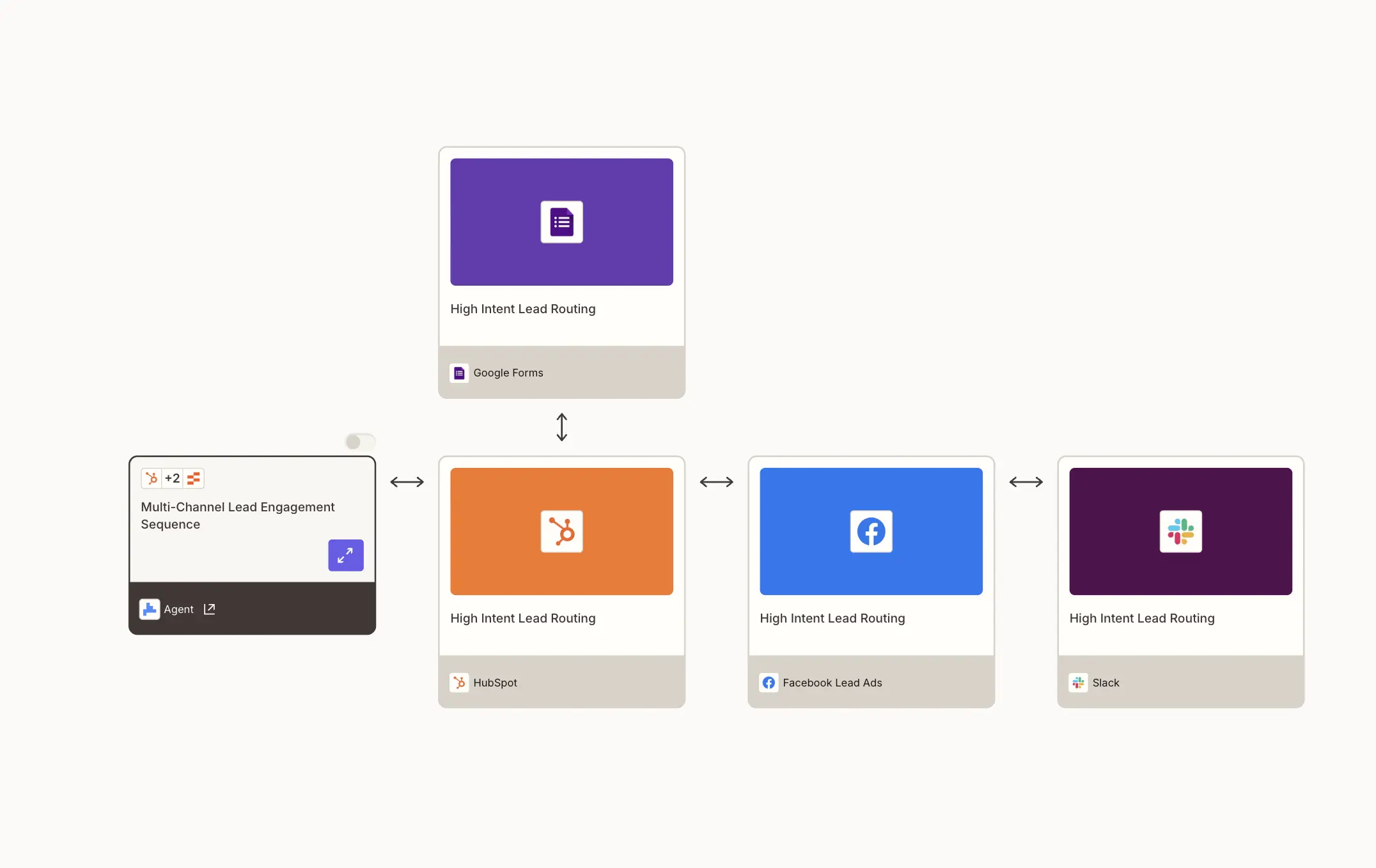
By connecting AI agents to your Salesforce instance, you can create a proactive system that works for you. Here are three key ways to do it.
1. The autonomous data agent: Guaranteeing data quality
As covered in our previous post on data entry, the first step is to automate data hygiene. An AI agent can be built to connect to Salesforce and your reps' other tools to handle all administrative work:
- Automated Activity Logging: Every email, call, and meeting is automatically logged in the right place.
- Real-Time Enrichment: New leads are instantly enriched with data from external sources like LinkedIn and company websites.
- Data Cleansing: The AI constantly works in the background to de-duplicate records, validate contact information, and flag outdated contacts.
This creates a foundation of clean, reliable data—the essential fuel for any other AI-driven insight. We provide a full blueprint in our CRM data entry automation guide.
2. The predictive forecasting agent: Seeing the future
With a foundation of clean data, you can build a predictive AI model. The model analyzes thousands of signals from your historical deal data—deal size, industry, engagement frequency, sales cycle length—to learn what a "won" deal looks like. It then applies this learning to your current pipeline to generate an unbiased probability score for every open opportunity.
Instead of a sales manager asking a rep, "How are you feeling about this deal?" they can have a more data-driven conversation: "The AI has flagged this deal as at-risk because we haven't had contact with the VP of Finance in two weeks. What's our plan to re-engage them?" This improves forecast accuracy by over 30% and helps managers de-risk their pipeline proactively. This is a key benefit we discuss when calculating the ROI of sales AI.
3. The real-time enablement agent: Just-in-time insights
This is where Salesforce becomes truly proactive. An AI agent can monitor your open opportunities and provide reps with the information they need, right when they need it. For example, when a rep opens an opportunity record in Salesforce, the AI can automatically display a "smart summary" panel:
- Key Information: A summary of the account, the key stakeholders involved, and the deal's current status.
- Recommended Next Action: Based on the sales playbook, the AI might suggest, "Next Step: Send the 'Acme Corp' case study and propose a technical deep-dive."
- Relevant Content: The AI provides direct links to the most relevant content for this specific deal, such as a case study from the same industry or a battle card for a competitor that has been mentioned.
This turns the Salesforce opportunity page from a static data entry form into a dynamic, intelligent workspace that helps the rep strategize their next move.
Building your Salesforce intelligence engine
The Damulo 3-Day AI Sprint is designed to build these custom AI agents directly on top of your existing Salesforce instance. We transform Salesforce from a system that your reps are forced to use into a powerful partner that helps them win. It's the key to unlocking the full potential of your most valuable data asset.
Make Salesforce work for you
Transform your CRM from a passive database into a proactive sales engine. Download our free AI Blueprint Checklist to learn how.
Download your free checklist →